
Project
Senior Year Capstone
Year
2024
Industry
E-commerce
Role
Product Manager
Team
1 PM, 2 Designers, 1 Dev
Challenge
Independent sellers of second-hand clothing often rely on fragmented tools—social media for promotion, DMs for communication, and separate platforms for transactions. This disjointed experience leads to poor coordination, inconsistent buyer interactions, and makes it difficult for sellers to showcase inventory effectively or scale their operations.
There’s a clear need for a centralized, user-friendly platform that streamlines the resale process and fosters stronger buyer-seller connections.
Results
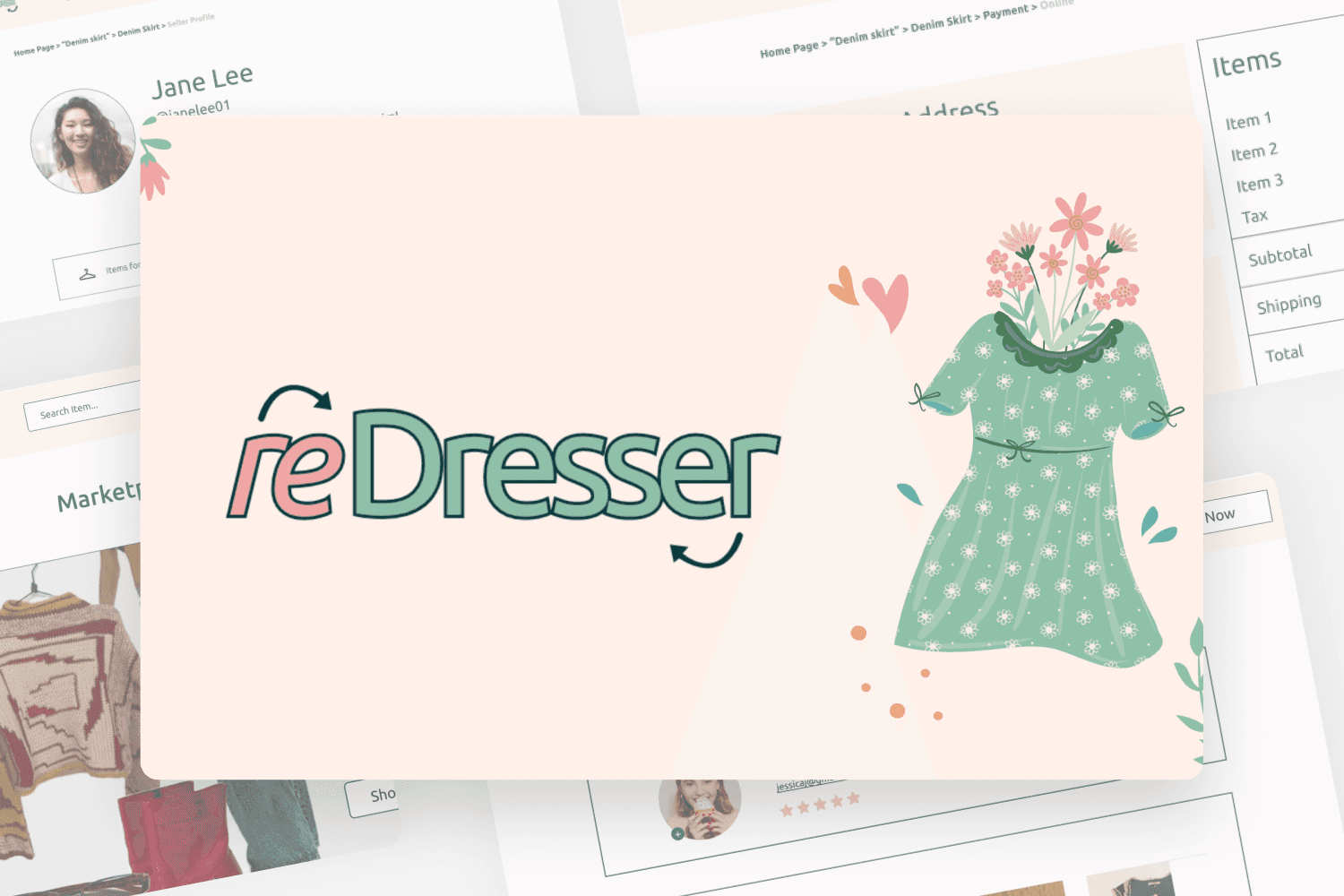
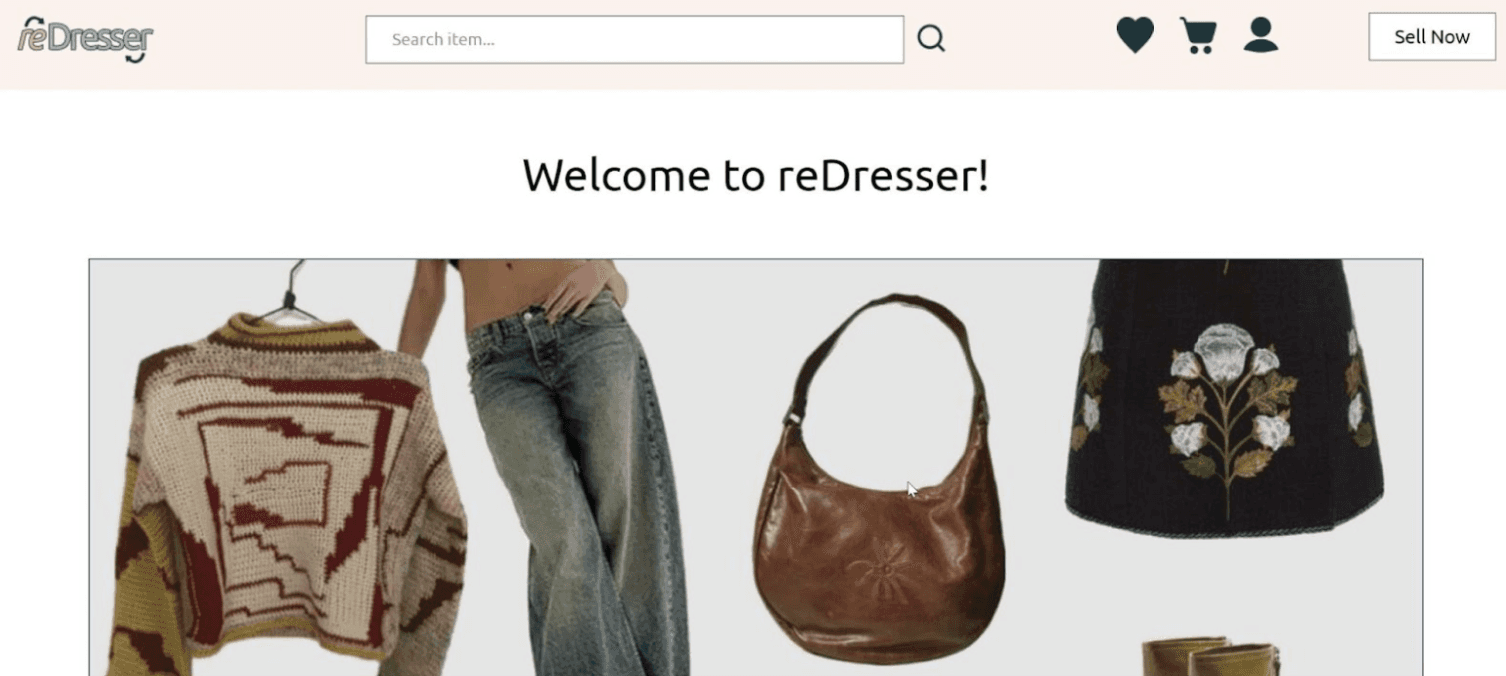
ReDresser is a curated online marketplace designed for small and local sellers in the Greater Toronto Area (GTA) to showcase and sell second-hand fashion.
We built ReDresser to serve as a centralized hub that simplifies the resale experience—helping buyers discover unique, affordable pieces, while giving independent sellers an easy, cost-effective way to connect with a broader audience.
75%
Gen Z consumers prioritize sustainability when shopping
67%
Millennials and Gen Z shoppers have purchased secondhand clothing in the past year.
60%
In Toronto, consumers say they prefer buying from local businesses to support their community.
Process
Goal
The core value of ReDresser lies in connecting local buyers with curated second-hand fashion from independent sellers. A “successful match” (a completed transaction or initiated buyer-seller interaction) reflects both user engagement and platform utility.
Competitive Analysis
I led a SWOT analysis of key competitors in digital marketplace, Depop, Grailed, ThredUp, and Facebook Marketplace to understand their strengths, user gaps, and opportunities for differentiation.
Target Audience
We designed ReDresser for environmentally conscious shoppers and sellers in the Greater Toronto Area (GTA) who value sustainability and community-based commerce.
Prioritization
We prioritized features that delivered immediate value and were technically feasible, such as:
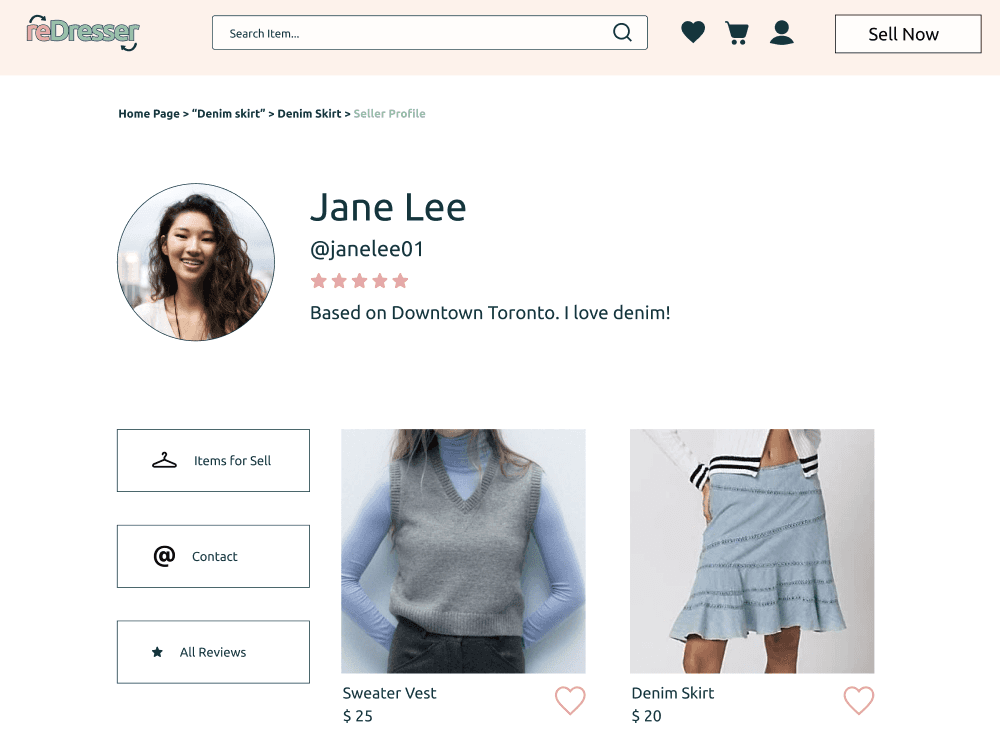
Search & Filter Tools (e.g., browse by type, brand, or review)
Buyer/Seller Messaging & Checkout
Local Discovery & Thrifted Clothing Listings
Fraud Reporting System & Rating
We applied MoSCoW prioritization to scope must-have vs. nice-to-have features, keeping our development focused and user-centered.
Implementation Strategy
We split development into two simultaneous stage: Front-End and Back-End. to accelerate progress while maintaining close cross-functional collaboration.
Front-End: We began with wireframes in Figma to define layout and flow, followed by high-fidelity mockups reflecting our creative direction. After testing and feedback rounds, we moved development into TeleportHQ to generate clean, responsive HTML/CSS.
Back-End: We chose Django for its robust framework and simplicity in handling databases. We used SQLite, Django’s default database, for lightweight deployment. Finally, we integrated the HTML/CSS from TeleportHQ into Django to connect the front-end and back-end components.
“ With our new visual branding and language in place, the new Shopify brand clearly captures the essence of our current and target customer base, our employees, and our values. ”
Conclusion
💡 Stay agile and scrappy! Limited resources and tight timelines on a lean team taught me the value of flexibility and wearing multiple hats across UX, data, and product management.
💡 Prioritization was key! It helped us stay focused on building what mattered most, avoiding unnecessary complexity early on.
✨ A flexible and adaptive mindset enabled the team to quickly respond to unexpected obstacles and shift strategies when needed.
Project
Senior Year Capstone
Year
2024
Industry
E-commerce
Role
Product Manager
Team
1 PM, 2 Designers, 1 Dev
Challenge
Independent sellers of second-hand clothing often rely on fragmented tools—social media for promotion, DMs for communication, and separate platforms for transactions. This disjointed experience leads to poor coordination, inconsistent buyer interactions, and makes it difficult for sellers to showcase inventory effectively or scale their operations.
There’s a clear need for a centralized, user-friendly platform that streamlines the resale process and fosters stronger buyer-seller connections.
Results
ReDresser is a curated online marketplace designed for small and local sellers in the Greater Toronto Area (GTA) to showcase and sell second-hand fashion.
We built ReDresser to serve as a centralized hub that simplifies the resale experience—helping buyers discover unique, affordable pieces, while giving independent sellers an easy, cost-effective way to connect with a broader audience.
75%
Gen Z consumers prioritize sustainability when shopping
67%
Millennials and Gen Z shoppers have purchased secondhand clothing in the past year.
60%
In Toronto, consumers say they prefer buying from local businesses to support their community.
Process
Goal
The core value of ReDresser lies in connecting local buyers with curated second-hand fashion from independent sellers. A “successful match” (a completed transaction or initiated buyer-seller interaction) reflects both user engagement and platform utility.
Competitive Analysis
I led a SWOT analysis of key competitors in digital marketplace, Depop, Grailed, ThredUp, and Facebook Marketplace to understand their strengths, user gaps, and opportunities for differentiation.
Target Audience
We designed ReDresser for environmentally conscious shoppers and sellers in the Greater Toronto Area (GTA) who value sustainability and community-based commerce.
Prioritization
We prioritized features that delivered immediate value and were technically feasible, such as:
Search & Filter Tools (e.g., browse by type, brand, or review)
Buyer/Seller Messaging & Checkout
Local Discovery & Thrifted Clothing Listings
Fraud Reporting System & Rating
We applied MoSCoW prioritization to scope must-have vs. nice-to-have features, keeping our development focused and user-centered.
Implementation Strategy
We split development into two simultaneous stage: Front-End and Back-End. to accelerate progress while maintaining close cross-functional collaboration.
Front-End: We began with wireframes in Figma to define layout and flow, followed by high-fidelity mockups reflecting our creative direction. After testing and feedback rounds, we moved development into TeleportHQ to generate clean, responsive HTML/CSS.
Back-End: We chose Django for its robust framework and simplicity in handling databases. We used SQLite, Django’s default database, for lightweight deployment. Finally, we integrated the HTML/CSS from TeleportHQ into Django to connect the front-end and back-end components.
“ With our new visual branding and language in place, the new Shopify brand clearly captures the essence of our current and target customer base, our employees, and our values. ”
Conclusion
💡 Stay agile and scrappy! Limited resources and tight timelines on a lean team taught me the value of flexibility and wearing multiple hats across UX, data, and product management.
💡 Prioritization was key! It helped us stay focused on building what mattered most, avoiding unnecessary complexity early on.
✨ A flexible and adaptive mindset enabled the team to quickly respond to unexpected obstacles and shift strategies when needed.